Creative Outdoor Play Area Ideas for Kids to Boost Fun and Imagination
- backyardbeautyboar
- May 4
- 3 min read

Creating an outdoor play area for kids is more than just setting up swings and slides. It’s about designing a space that sparks creativity, encourages physical activity, and invites exploration. When children play outside, they develop social skills, improve their coordination, and let their imaginations run wild. This post shares practical, creative ideas to transform any outdoor space into a vibrant play area that kids will love.

Build a Themed Playhouse
A playhouse is a classic outdoor feature that can be customized to fit any theme. Instead of a plain structure, consider turning it into a pirate ship, fairy castle, or space station. Use paint, fabric, and simple decorations to bring the theme to life. This encourages imaginative play and storytelling.
Use weather-resistant materials to ensure durability.
Add windows and doors that open and close for interactive fun.
Include a chalkboard wall on one side for drawing and writing.

Create a Nature Exploration Zone
Kids are naturally curious about the world around them. Set aside a corner of your yard for nature exploration with elements like:
A small garden patch where kids can plant flowers or vegetables.
A bug hotel made from natural materials to attract insects.
Logs, rocks, and tree stumps for climbing and balancing.
This area teaches children about nature and responsibility while providing a hands-on learning experience.

Design a Sensory Pathway
A sensory pathway is a fun way to engage children’s senses and improve their motor skills. Create a path using different textures and materials such as:
Smooth stones
Soft grass patches
Wooden planks
Sand or mulch
Encourage kids to walk barefoot along the path to feel the different surfaces. This activity supports sensory development and balance.

Incorporate Climbing Structures
Climbing helps kids build strength and confidence. Instead of a standard jungle gym, try creative alternatives like:
A rope ladder attached to a tree.
A rock climbing wall with colorful holds.
A wooden balance beam.
Make sure all structures are safe, sturdy, and age-appropriate. Adding a soft surface underneath, like rubber mulch or sand, reduces injury risk.

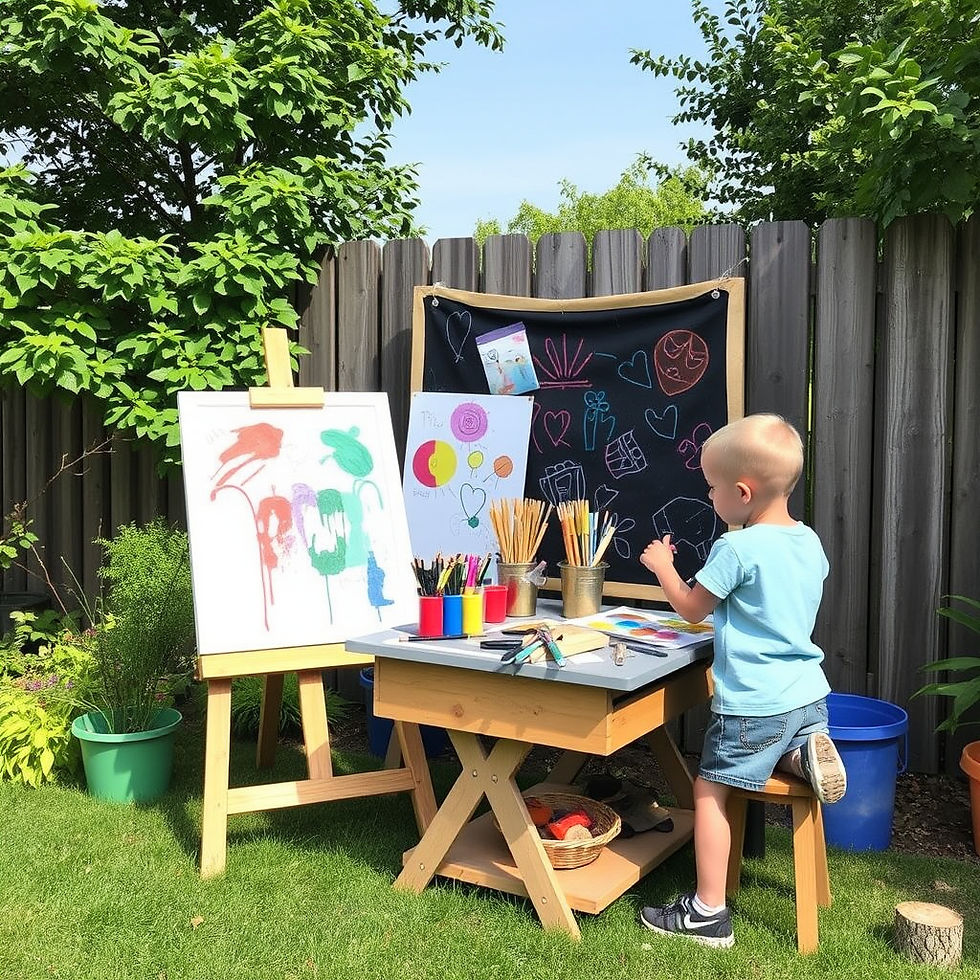
Set Up an Outdoor Art Station
Encourage creativity by dedicating a spot for outdoor art projects. This can include:
An easel with washable paints.
A chalkboard wall or pavement chalk.
A table with craft supplies like paper, glue, and natural materials.
Outdoor art allows kids to express themselves freely and enjoy messy play without worrying about indoor cleanup.
Add a Water Play Area
Water play is a favorite for many children, especially on warm days. Ideas for water play include:
A small splash pad or sprinkler.
A water table with cups, funnels, and toys.
A DIY mud kitchen where kids can mix water and soil.
Water play supports sensory development and can be calming and refreshing.

Create a Cozy Reading Nook
Not all outdoor play has to be active. A quiet corner with comfy seating and shade invites kids to relax and read. Use:
Outdoor bean bags or cushions.
A small tent or canopy for shade.
A weatherproof bookshelf stocked with children’s books.
This space encourages a love of reading and provides a break from more energetic play.

Use Natural Materials for Play
Incorporate natural elements like wood, stone, and plants into the play area. These materials blend with the environment and offer tactile experiences. Examples include:
Wooden stepping stones.
A sandpit bordered by logs.
Planting fragrant herbs or flowers.
Natural materials inspire curiosity and help children connect with the outdoors.

Include Open Spaces for Free Play
While structured play areas are great, open spaces allow kids to invent their own games. Keep some lawn or paved areas clear for:
Running and chasing games.
Ball games like soccer or catch.
Setting up temporary play equipment like tents or obstacle courses.
Open spaces give children freedom to move and create.

Safety Tips for Outdoor Play Areas
Safety is crucial when designing outdoor play spaces. Keep these points in mind:
Use soft ground coverings like mulch, rubber, or grass under climbing equipment.
Check for sharp edges, splinters, or loose parts regularly.
Ensure play structures are age-appropriate.
Provide shade to protect from sun exposure.
Keep water play areas supervised.
Regular maintenance and supervision help prevent accidents and keep play safe.


Comments